


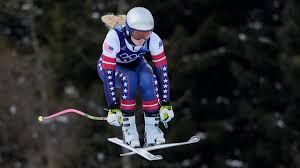
Born on October 18th, 1984, in Minnesota, Lindsey Vonn is an accomplished American alpine skier, specializing in downhill, super-G, and giant slalom. Vonn has won four World Cup championships throughout her career and accumulated 82 World Cup race wins. Recently, on February 3rd, Vonn was diagnosed with a complete tear of her anterior cruciate ligament (ACL). Despite this, Vonn is determined to step back into competition and continue preparing for the Olympics, ignoring others’ questions about whether that is the right decision. Instead of fueling the controversy by replying on social media to doubters, calling their doubts “ageism”. 
The anterior Cruciate Ligament (ACL) is an important part of her particular sport. Being one of the primary ligaments that stabilizes the entire knee joint, supporting and connecting two vital bones (Femur to Tibia), and preventing the tibia from sliding forward during important movements in high-speed downward skiing, such as pivoting, sudden changes, and cutting through the snow. Non-contact ACL tears will usually occur because of sudden movement/change in direction while the leg is firmly planted on the ground. This mechanism, combined with the awkward landings and intense pressure on the knee, especially in sports that require control and high speed, can lead to a more serious season-ending injury. In Lindsey Vonn’s case, her ACL tear occurred when she crashed during a downhill ski run after losing her balance. Lindsey Vonn refused to undergo reconstructive surgery, which would have caused her to end her season. Vonn chose to treat this injury conservatively. This mainly focused on strengthening the muscles around her knee to compensate for her ruptured ACL (Quads, Hamstrings, Hip muscles, etc.). Vonn also used external treatments, such as wearing a knee brace, limiting movement, and providing a stable structure for her knee to heal. Also, testing the limits of what she could do and training and monitoring how well she was progressing throughout this healing process.
Nethertheless, coming back to compete in the Olympics, let alone any competition, is still very dangerous and a huge risk to ending her career. To come back and compete in downwards skiing, Vonn needs to be able to master motions needed in her sport (twists, cuts, and especially changes in direction in the heavy snow) This is a main reason most people were worried for Lindsey, without her ligament attached h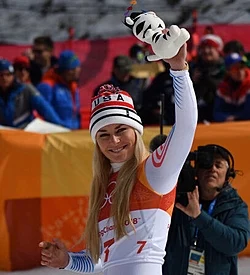 er knee could buckle in the middle of her competition. She could fall without her ability to compensate, with reduced confidence (instability), which is a huge indicator for many secondary injuries, such as meniscus tears or excessive cartilage damage. In the worst case, competing too early can have long-term consequences. For instance, increasing the likelihood of early-onset osteoarthritis, joint degeneration, and additional damage can negatively affect future knee health, repair, and recovery. Therefore, it’s especially important to monitor her swelling, pain, and other external symptoms in the days leading up to her Olympic competition.
Finally, while Lindsey Vonn could potentially return to compete in the Olympics in Downhill Skiing with a completely torn ACL, it would not be smart for her to do so, given the substantial risks that competing in her sport carries. Lindsey can compensate for her loss of ligament stability. But it carries so much long-term damage that if she continues on her path, it could compromise her athletic ability and her limitations on everyday activities. Yes, winning a gold medal is a huge achievement, but it shouldn’t be something you should risk your life for long-term beyond competition.
In my opinion, after seeing her fail to compete, Lindsey Vonn’s decision is both admirable and concerning. Vonn is 41 and still pursues challenges many others wouldn’t attempt. It does upset me to see her have to be lifted onto an air lift for medical attention, only 13.4 seconds into her comeback. However, I still believe Vonn has demonstrated both mental and physical toughness to the highest standard throughout her athletic career. If it were up to me, I would have recommended constant monitoring of her knee, a strong focus on neuromuscular training, and a clear, constructive post-Olympic surgical and rehabilitation plan, in case the worst comes to worst.