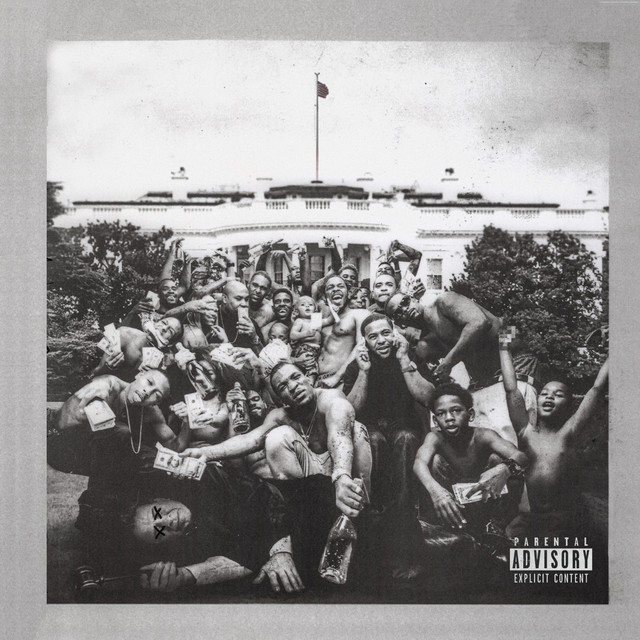
To Pimp A Butterfly is one of the most critically acclaimed albums, ever. Since its 11th anniversary is coming up, and it’s Black History Month, I thought it’d be a good idea to delve deep into this project. To Pimp A Butterfly uses a blend of jazz rap and conscious rap to give insight into what not only Kendrick has experienced, but also what Black people as a whole go through.
Wesley’s Theory
Wesley’s Theory is an introduction to TPAB’s overall themes, and helps give an idea of what one will experience listening to this album. It describes what a lot of Black artists go through when they enter the music industry: Exploitation of their talents in order to make more money for the industry. Verse one and verse two are spoken by two different personas, verse one being the perspective of a Black artist, and verse two being the perspective of Uncle Sam. It explores the negatives of capitalism and how it affects Black artists.
For Free? – Interlude
This song has two meanings, literal and metaphorical. Literally, the song is talking about Kendrick unwilling to please a girl and her money-oriented ways. Metaphorically, the song continues the theme of capitalism and exploitation, where Kendrick represents the Black artist, and the girl represents the industry and capitalism.
King Kunta
Kunta is a reference to the character Kunta Kinte from the book Roots: The Saga of An American Family. Kinte did not conform to the attempts of slave masters trying to get Kinte to be more white. Kinte chose to stay true to himself, even if he got punished for it. That is essentially what King Kunta is about: Kendrick staying true to himself and his hometown instead of changing himself in order to benefit the industry.
Institutionalized
To be institutionalized means to be so used to a certain way of life, that it’s all you know. This song explains how Kendrick, even though he’s out of poverty and crime-ridden lifestyles, is still held captive by that same lifestyle, even as he is living his dream and in a good spot in life financially and socially.
These Walls
There are three walls in this track: The walls of a woman, the walls of a prison cell, and the walls of Kendrick’s mind. Kendrick misuses the influence that he has gained to get women. In this song, Kendrick gets with a younger mother, who has her husband in prison. The man was imprisoned for murdering Kendrick’s friend in Sing About Me, I’m Dying of Thirst on good kid m.A.A.d city. Kendrick gets with his wife in order to get revenge. Kendrick’s actions also cause him to self-reflect, leading into the next song:
u
This song immerses the listener in Kendrick’s mental state: A deep depression. Kendrick recounts his negative experiences in Compton, and his survivor’s guilt. He made it, but at what cost?
Alright
An energetic, upbeat song about being optimistic, and moving past your previous failures, assuring the listeners, “We gon’ be alright.” Pretty sure everyone’s heard this song.
For Sale? – Interlude
Just like the first interlude, this song is about how the industry exploits Black artists, but in this interlude, Kendrick personifies the music industry as an attractive woman named Luci, a nickname for Lucifer. Luci promises aid for his family back home, and infinite riches. All he needed to do was “sign the contract,” in order words, copulate.
Momma
My personal favorite. Kendrick realizes that he needs to embrace his roots, instead of trying to move on from it, so he returns back home. For Kendrick, home is not only Compton, but it’s also his African roots. In the second verse, Kendrick felt as though he knew everything when he left Compton, but the day he returned, he knew nothing. He no longer understood his roots. On a trip to South Africa, Kendrick talks to a boy resembling himself. The boy talks about his personal issues and how they influence his negative outlook on life, but the boy doesn’t want to involve Kendrick in his issues simply because Kendrick is too popular. Kendrick wouldn’t understand. The boy believes that Kendrick is living a lie, and leaves Kendrick with advice.
Hood Politics
Kendrick reminisces on the days in Compton, and talks about himself, the music industry, and politics. He also discusses the illusion that is portrayed about the hood, with media framing the hood in a certain, negative light.
How Much A Dollar Cost
Another personal favorite. Kendrick recounts an experience with a homeless man in South Africa. The homeless man kindly asks for a dollar while Kendrick is pumping up his car. Kendrick refuses, suspecting with no evidence that the homeless man is a drug addict. The man begs Kendrick, saying that he has beaten temptation. Kendrick refuses again. Kendrick saw the man staring at him in disappointment, aggravating him. The man mentions Exodus 14, a scripture talking about being humble, making Kendrick feel guilty for his actions. Kendrick still holds resentment towards the man, and gives reasons as to why he rejected him. Finally, the homeless man reveals himself as God, saying that a dollar is the price of having a spot in heaven.
Complexion(A Zulu Love)
The complexion of your skin does not matter.
The Blacker The Berry
The main message of this song is to call out hypocrites that say they hate White on Black violence like police brutality, but also indulge on violence against people themselves.
You Ain’t Gotta Lie (Momma Said)
Just be you. Don’t fake it.
i
A direct contrast to u, preaching self-love instead of self-hate. You can’t control everything, so you shouldn’t blame yourself for everything.
Mortal Man
At the end of the day, Kendrick is still human, and still makes mistakes. So when he does make mistakes, will you still be a fan?
At the end of Mortal Man, Kendrick has an interview with deceased artist, 2Pac. At the end of the interview, Kendrick recites a poem that his friend wrote. This poem, using the process of metamorphosis, is a perfect closing summary of TPAB. I’ve done this much, now you finish the story with your own interpretation.